Friday, September 13, 2013

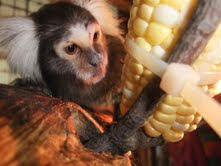
Story Book Farm Primate Sanctuary officially welcomes Darwin

For immediate release

September 13, 2013

Story Book Farm Primate Sanctuary officially welcomes Darwin

Story Book Farm Primate Sanctuary would like to thank everyone who has supported us over the past several months and throughout this extremely difficult and stressful time. 

We also thank the Honourable Justice Vallee for her comprehensive and detailed decision, which we believe is the right result. While our focus has always been on providing the very best care that we can for our residents, Story Book is very proud to have played a part in shaping Canadian law and we will continue our efforts to influence how non-human primates are treated in Canada.

Darwin has continued to grow and thrive since arriving at Story Book last December.  We will continue to watch him grow and develop into the monkey that he was always supposed to be.

We would also like to thank our legal counsel, Kevin D. Toyne and David Meirovici of Brauti Thorning Zibarras LLP.

Once again, thank you for your continued support. For further inquiries please contact us at sbfpsanctuary@gmail.com or visit our website at www.storybookmonkeys.org.


Wednesday, July 17, 2013

Pockets Warhol Originals for Indiegogo campaign

Please see our Indiegogo campaign here!

There are 6 limited edition Pockets Warhol works of art on 12x16 canvas available for a $220 donation, with shipping/handling and applicable taxes included. Please see below for the artwork available, and it is first-come, first-served in terms of selecting the piece you'd like.

Thanks for your interest!!

Aztec

Fruit Salad - SOLD!

Lhasa

Luna

Self-Portrait of Diego Rivera

Stellar

Friday, June 14, 2013

Friday Facts – Llamas!


It's Chili!
Happy Friday! Today we bring you llama facts!  Llamas? But they’re not primates?  At the sanctuary, we have other residents, including Minnie the donkey, Whisky and Seek the horses and Chili the llama.  Chili is a fun-loving llama.  He happily runs down the pasture and enjoys play-dates with his doggie friend Bosley.  When Bosley was a puppy, they would romp and play for hours in the grass.  They still look forward to their time together.  Chili is curious, especially when we are unloading groceries from the car. One day, one of the volunteers left her trunk open while unloading and Chili took it as a buffet, standing behind the car and eating the fresh veggies right out of the trunk!  He spends time near Pockets, and when I am giving the monkeys bananas outside, Chili always gets the peels, so everyone has a share.

Did you know?
·         Llamas are members of the camelid, or camel, family and are related to alpacas, guanacos and vicuñas

·         They are hearty animals, living high in the Andes Mountain in rough terrain where indigenous peoples have used them as pack animals for hundreds of years.  People also use their wool as it is very soft and lanolin free. 

·         People also use llamas to guard livestock from predators

·         An adult llama can weigh up to 250 pounds.  A baby llama is called a cria and weighs between 20 to 30 pounds. 

·         Gestation is around 350 days – almost one year!  At the time of birth all the female or Dams of the herd gather around to protect the birthing mother and her cria.  Birth is usually quick and problem-free, over in less than 30 minutes and done while standing.

·         Llamas are herbivores who graze on grass and, like cows, regurgitate their food and chew it as cud. They chomp on wads for some time before swallowing them for complete digestion. Llamas can survive by eating many different kinds of plants and they need little water.

·         If a llama get annoyed, they pull back their ears and spit.  Chili is a happy sweet guy, so that has never happened!

·         Llamas are social animals and prefer to live with other llamas or herd animals.  Chili enjoys being part of the SBFPS herd along with Minnie and Whisky.  He is still working out his relationship with Seek, as she is the new girl on the block.

Friday, April 26, 2013

Friday Facts - Spider Monkeys!


It's George!
On this beautiful spring-like Friday we bring you Spider Monkey facts!  George is a very vocal black spider monkey who loves to tell you all about his day.  After the cleaning is done, I look forward to one-on-one time with George, playing, grooming and “talking” with him.  He is particularly taken by blondes and will show is masculine side preening for the girls.  He is an elderly gentleman in his 40’s, although you would never know it by the way he swings around inside and outside! His favourite treats are dates, and peanut butter and banana sandwiches.   

Mr. Jenkins is a black-handed spider monkey who loves to play. His area is full of swings, tents, blankets, food puzzles and toys.  He LOVES celery chewing it, spreading the juice all over his chest while making happy sounds!  If Chili the llama comes too close for his liking while he is outdoors, Jenks will break into loud barking to protest.
Jenkins playing with a treat box
 

·        Spider monkeys are of the genus Ateles which contains seven species, such as Red-faced, White-fronted, and Colombian.  Sadly, Black-headed and Brown spider monkeys are listed as Endangered (EN) on the IUCN Red List.

·        Spider monkeys are “New World” monkeys found in Central America in the countries of Mexico, Belize, Costa Rica, El Salvador, Guatemala, Honduras, Nicaragua and Panama.

·        Spider monkeys live in the canopy (arboreal), are active during the day (diurnal) and have a long prehensile (gripping) tail, sometimes called the fifth limb.

·        Spider monkey communities are “fission-fusion”, meaning that they split up into smaller subgroups to forage and sleep and then come together again.

·         Their diet includes fruit, leaves, flowers, nuts, seeds, insects, arachnids and eggs.

·        In the spider monkey world, the females choose their mates and will have a single baby every two to five years. The babies depend completely on their mothers for about ten weeks.  After that, the young ones will integrate into the troop, moving on their mother’s back for a year, and being dependent on their moms for three years.

·         A highly vocal primate, their vocabulary consists of barks, screeches, whinnying and howling.  You can always hear George and his neighbour Mr. Jenkins!

·        Spider monkeys are considered the most intelligent of the New World monkeys due to their brain size.  Jenkins and George are very clever and curious.

·         You can become a Foster Friend to George and Jenkins by visiting our website!
Jenkins and Pockets chatting outside
 

Friday, April 12, 2013

Friday Facts - Baboons!

Today, we share baboon facts!  Sweet Pea and Pierre are Olive baboons and Nan is a Hamadryas baboon.  While in Kenya, it was special to see wild baboon troops on the Maasai Mara. Sadly their numbers are dwindling due to habitat loss, poaching for bush meat and the illegal pet trade.  Sweet Pea is very maternal and loves to groom for hours.  


Sweet Pea enjoys a nap on a giant stuffy!
Pea especially likes large stuffed animals and faux fur to play with and sleep on, as you can see in the photo. She also likes puzzles, taking things apart and putting them back together again.  Pierre is a handsome male who is highly social and supportive towards Sweet Pea and his neighbours.  They enjoy special treats like sugar cane and foraging in the straw for raisins and berries and their pools in the summertime.  Nan or “Nannie” as she is affectionately known, loves her lettuce and enjoys being outside and basking in the sun.  At this time of year, a special treat for all the monkeys is the tender shoots of dogwood which we clip and put in their enclosures.  Nan even put her lettuce aside this past Saturday to chew on the red branches!


Statue of the god Toth
·          Ancient Egyptians considered the baboon to be sacred and related them with the god Thoth. The Egyptians believed him to be the inventor of spoken and written language, astronomy, geometry, and medicine. 
(Photo: Museum of Antiquities)


·          There are five species of baboons:  Chacma, Olive, Yellow, Guinea and Hamadryas.

·          Baboons are “Old World” monkeys who live in arid and semi-arid conditions like the Savannah. Hamadryas baboon live in cliffs, so Nan has many platforms and walkways.

·      They are ground dwellers and do not have prehensile tails.  Pockets, a capuchin, is a “New World” monkey with a long prehensile (gripping) tail that helps him climb (and paint!)

·       Baboons are omnivores and will eat plants, insects and small animals. Sweet Pea particularly looks forward to raw or boiled eggs!

The "divine" Nan
·          Baboons have a complex social structure made of dominant males and females from the same families.  It is observed and carried from one generation to the next.

·      The baboon’s gestation period is six months and they typically have a single offspring.  If it is female, it will have a lasting bond with the mother and will remain in the same troop all of their lives.  If it is a male, upon sexual maturity at six years of age, he will leave the troop to create his own troop or join another.

·       Baboons have large canine teeth and will “yawn” to display them passively.

·          Some of their vocalizations include grunting, screaming and barking as they call to their troop members to warn or to get a sense of where they are.  At night, they will long-call.  There are ten different documented sounds.

·          You can become a Foster Friend to Sweet Pea, Pierre and Nan by visiting our website! Foster by April 20 and get a bonus monkey handprint to go with!

Pierre enjoying sugar cane

Friday, March 22, 2013

Friday Facts - Capuchins!


Pockets being reflective
 
Pockets is a White Headed Capuchin and Cheeko is a Tufted or Black Capped Capuchin.  Did you know that capuchins are considered the most intelligent of the New World monkeys and that they are sophisticated tool users?  We can attest to that!  Therefore, they need a high level of enrichment activities – games, puzzles, plants, tree branches, structures and food devices.  Pockets is always being inventive and finding new ways to do things!  As you know, he loves to paint and gets so excited to use different colours and techniques when creating.  Cheeko is very curious and checks out all the new things, plays with the “monkey in the mirror” and basks in the glow of his heat lamp.  The two boys play and tease each other with their long prehensile tails.  Although from South America, they enjoying going out and playing in the snow too, albeit for short spurts of time.  It is important that they have the choice to do so.
Cheeko enjoys the foliage
·        Capuchins have the largest brains of all the New World monkeys.
·        Like other monkeys in the genus Cebus, the White Headed Capuchin is named after the friars of the Order of Friars Minor Capuchin– the cowls worn by these friars closely resemble the monkey's head coloration. When explorers in the 15th century found small monkeys which looked like these friars, they named them capuchin monkeys.
·        They can be between eight to thirteen pounds, with females being smaller.  Their life span is between 30 to 45 years.
·        It takes approximate two years for a young capuchin monkey to become independent from its mother.
·        Capuchins are active in the daytime, and live in groups of 3-30, including at least one male.
·        Capuchins are very vocal animals that scream, whistle and bark. Pockets and Cheeko are always chatting and playing!  In this way, they call each other in order to maintain contact and may express their dislike if someone or something disturbs them.  As with most primates, they frequently groom each other and have complex social lives with alliances made between different individuals.
·        Capuchins are tree dwellers who live in low-lying forests, in primary or advanced rainforests. They are native to Southern Central America and are found from Costa Rica to Paraguay and Trinidad. When I was volunteering in Costa Rica, the forests around us where home to wild troops.
·       Tufted capuchins are more powerfully built than the other capuchins, with rougher fur and a short, thick tail. They have a bundle of long, hardened hair on the forehead that is pronounced or tufted.

Tuesday, December 25, 2012

Happy Holidays

Happy Holidays to all our SBFPS friends! May you enjoy this time with your families, friends and loved ones.  Thank you so much for your continued support.